The LSA Disability Access and Inclusion Plan (DAIP) 2026 - 2030 aligns with the State Disability Inclusion Plan and sets out the actions that we will take over the next four years to improve access and inclusion for people with disability who engage with our organisation and services.
Download, print or read the DAIP below. If you require a copy in an alternative format, please email lifetime.support@sa.gov.au or visit our Contact Us page.
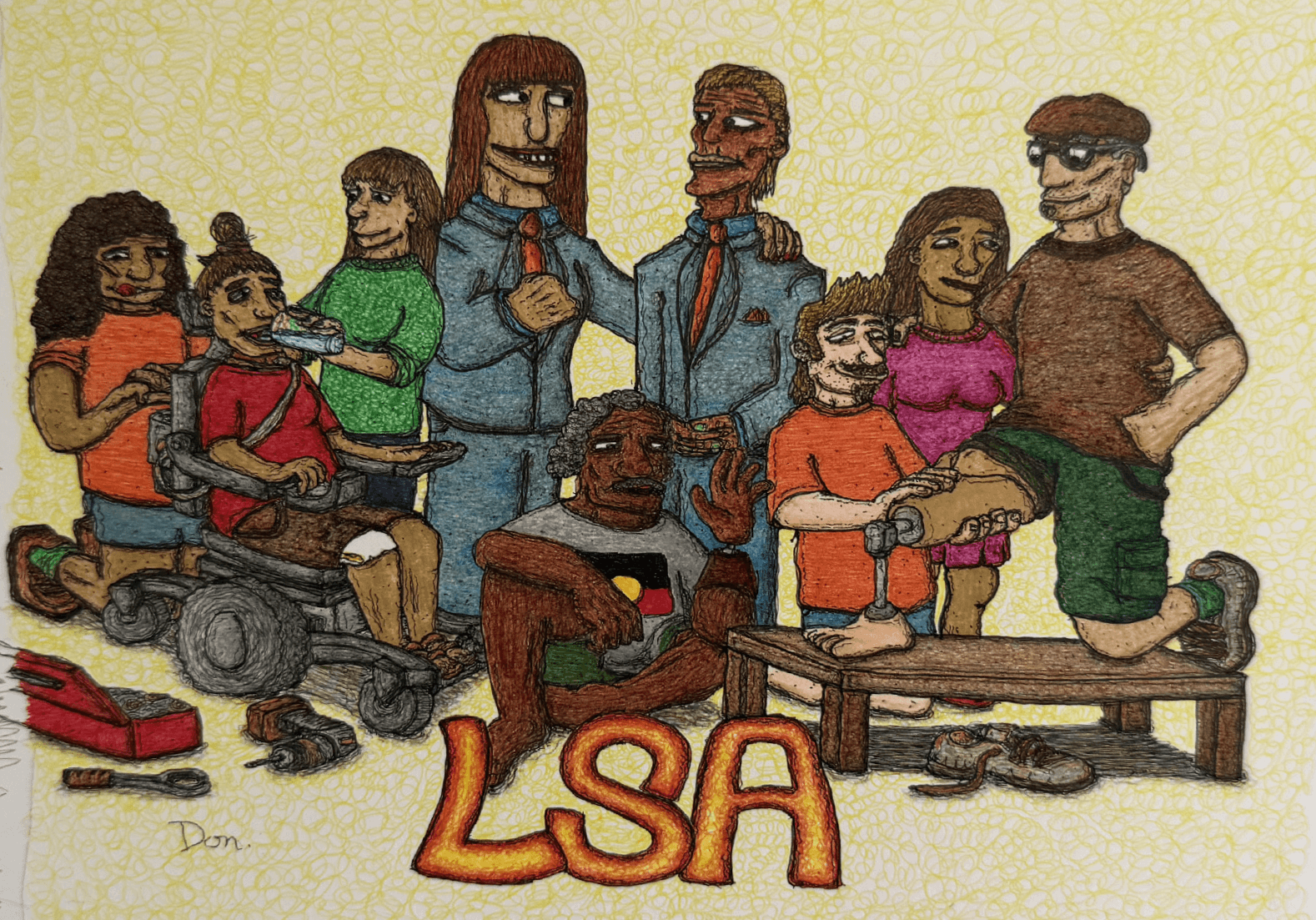
Our DAIP Artwork
Featured Artist
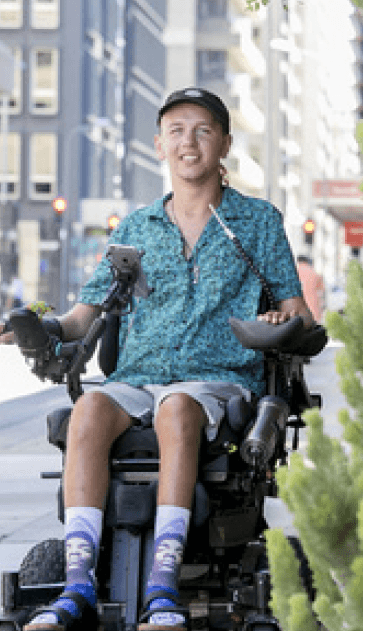
This artwork was created by LSS Participant Jayden (Donny) Schulz. From the age of five, Donny showed a strong passion for art. Encouraged by a family friend who was also an artist, he began exploring and developing his creative talent early in life. He continued studying art through high school until Year 11. While drawing remained a hobby, Donny turned his focus to football, as many teenagers do. Today, Donny has returned to drawing and his artistic journey is remarkable. After a serious motor vehicle accident at the age of 17, Donny’ s life changed dramatically. He sustained a spinal cord injury that resulted in tetraplegia, leaving him unable to walk or use his hands. During his long recovery and extended time in hospital, Donny began teaching himself to draw with his mouth. With determination, practice, and a mobile drawing board adapted to suit his needs, his talent has continued to flourish.
Message from the Chief Executive
Since its inception in 2014, the Lifetime Support Authority (LSA) has been committed to making a positive difference to Lifetime Support Scheme (LSS) Participants’ recovery and independence.
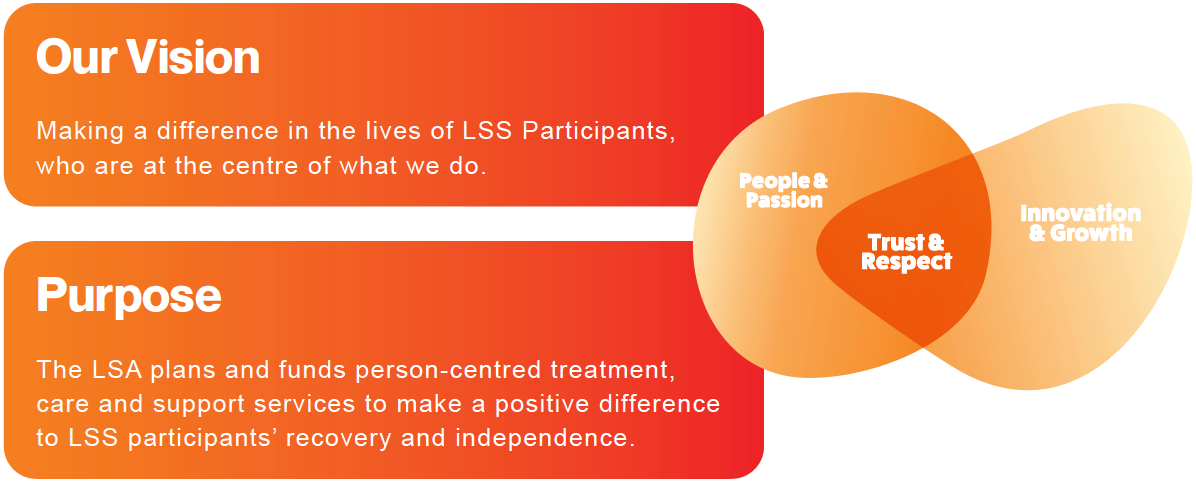
Through the Scheme, the LSA plans and funds person-centred treatment, care and support services for people who sustain serious injuries in motor vehicle accidents in South Australia, regardless of fault. Serious injuries, including brain and spinal cord injuries, amputations, burns and blindness can require a lifetime of support to help people engage in rehabilitation and maximise their independence in the community.
Importantly, the Scheme supports the state to deliver on the National Injury Insurance Scheme (NIIS), which operates in conjunction with the Commonwealth's National Disability Insurance Scheme (NDIS).
The Disability Access and Inclusion Plan (DAIP) 2026-2030 contains practical actions to improve access and inclusion for people living with disability who engage with our organisation, and its services.
The actions outlined in this DAIP reinforce our commitment to working collaboratively with LSS Participants, our employees with disability, and key stakeholders within the disability sector.
The implementation of this DAIP will further strengthen our commitment to enhancing person-centred service planning for LSS Participants and fostering an inclusive workplace at the LSA for employees living with disability. I am pleased to present our DAIP and look forward to providing updates on our progress.
Dr Peta Smith
Chief Executive
Acknowledgement of Country
The LSA acknowledges Aboriginal people as the state’s first peoples, nations and Traditional Owners of South Australian land and waters. We recognise that their unique cultural heritage, customs, spiritual beliefs, and relationship with the land are of ongoing importance today, and we pay our respects to Elders past, present and emerging leaders of the future.
We are committed to ensuring that the needs and aspirations of Aboriginal peoples with disability are incorporated in the design, development and implementation of the DAIP.
Language and Terminology
Every person with disability is different, with unique qualities, strengths, and support needs. Every disability is different, and many are not visible.
We all play an important role in shifting the narrative about disability. From the conversations we have, to the documents we write, it is our collective responsibility to make important choices that support long lasting change.
There are many misconceptions and misunderstandings in the community about what it means to have a disability which is why the use of accurate, appropriate and respectful language is so important. The words we choose can challenge assumptions and help build a more inclusive community. We acknowledge that language is a personal preference, and that different language and terminology preferences exist within the disability and neurodivergent community, and with individuals.
Based on feedback during consultations, and for the purposes of the DAIP, we have adopted ‘person-first’ language (i.e. person with disability), rather than ‘identity- first’ language (i.e. disabled person). We will endeavour to maintain this approach with all LSA documentation and communications. Enhancing inclusivity at the LSA begins with listening, learning and reflecting on assumptions we may hold about disability. While many people with disability generously share their experiences, fostering broader understanding is a responsibility we must all share.
The most important thing is to ask the person with disability how they would like to be referred to and represented, and to respect their wishes.
About Us
The Lifetime Support Authority (LSA) delivers the Lifetime Support Scheme (LSS), which was established under the Motor Vehicle Accidents (Lifetime Support Scheme) Act 2013 (SA).
The LSA commenced operations on 1 July 2014 and is a statutory authority governed by an independent Board and a Chief Executive. Through the Scheme, the LSA plans and funds necessary and reasonable treatment, care and support services for people who sustain serious injuries in motor vehicle accidents in South Australia, regardless of fault. Serious injuries including brain and spinal cord injuries, amputations, burns and blindness can require a lifetime of support to help people engage in rehabilitation and maximise their independence in the community.
The LSA administers the Scheme in accordance with the Motor Vehicle Accidents (Lifetime Support Scheme) Act 2013 (SA) and the LSS Rules which outline the eligibility criteria and how treatment, care and support needs are assessed.
The LSA takes a person-centred approach, ensuring LSS Participants are central to decision making and that families and friends are actively involved in the rehabilitation process. This includes choice of service providers, monitoring progress towards personal goals, and opportunities for social and economic participation.
The LSA currently employs around 120 people with 5% of our employees identifying as living with a disability. The lived experience, insight and expertise of these employees is invaluable.
Utilising the lived experience and knowledge of these LSA employees will provide tangible, measurable targets that will drive improvements for all LSA employees, moving towards ‘inclusion for all’, rather than ‘workplace adjustments’ for people living with disability. The change of focus to purposeful inclusion fosters belonging, reduces stigma, and improves outcomes for everyone, not just those who disclose a disability. Since the introduction of the first LSA DAIP in 2020, the LSA has delivered numerous actions to improve disability access and inclusion for employees, LSS Participants and LSA stakeholders. The LSA is also an active member of the Department of Treasury and Finance (DTF) Disability Inclusion Network and the DTF Equity, Diversity and Inclusion Working Group.
The DAIP responds to international, national and state disability legislation and policy instruments by aligning its actions with the South Australian State Disability Inclusion Plan (State Plan).
This alignment ensures this DAIP supports key instruments such as:
- United Nations Convention on the Rights of Persons with Disabilities (UNCRPD)
- Australia’s Disability Strategy 2021 – 2031 (ADS)
- Disability Inclusion Act 2018 (SA).
The Disability Inclusion Act 2018 (SA) signifies that communities must work together to remove barriers for people with disability. The Disability Discrimination Act 1992 (Cth) (DDA) and the Equal Opportunity Act 1984 (SA) (EOA) make disability discrimination illegal and promote equal opportunities and access for people with disability. Both pieces of legislation have strong influence over both national and state frameworks.
While the Disability Inclusion Act 2018 (SA) informs the scope of this DAIP, the LSA undertakes broader activities to promote disability access and inclusion. Through administration of the Motor Vehicle Accidents (Lifetime Support Scheme) Act 2013 (SA) the LSA provides treatment, care and support that promotes disability access and inclusion for LSS Participants.
The LSA recognises the voices, goals and aspirations of South Australia’s autistic and neurodiverse communities. Although the LSA is not a signatory to the SA Autism Strategy 2024–2029 or its associated Action Plan, it intends to adopt relevant actions led by the DTF where appropriate.
Within this broader legislative and policy context, the development of the DAIP has been informed by consultation and lived experience. As a living document this DAIP will evolve in response to legislative and other strategic changes.
Disability Access and Inclusion Plan (DAIP) Development Consultation
Creating a more inclusive LSA starts with listening, learning, and reflecting on the assumptions we may hold about disability. Many people with disability generously share their experiences but fostering understanding and belonging is something we can all contribute to.
Prior to the LSA undertaking consultation, the Department of Human Services (DHS) in developing the State Plan, captured extensive feedback from people with disability, their families and carers, service providers, advocacy groups, and the broader community. This feedback informed the development of the domains and priority areas that underpin both the State Plan and this DAIP. The development of this DAIP has been guided by the principle of “nothing about us, without us.”
To ensure the views of employees and LSS Participants with disability were central to the consultation process, the LSA:
- Included an employee with disability on the DAIP Working Group in a facilitation role.
- The DAIP Working Group reviewed the actions in the previous DAIP and considered the DAIPs of other organisations to inform and strengthen the actions in this plan.
- Directly consulted with employees with disability through interviews and other targeted communications.
- Engaged with the Participant Reference Group (PRG), both collectively and through individual consultations.
- Invited all employees to provide feedback on the draft DAIP.
The insights gained through stakeholder consultation complement and align with existing LSA policies, frameworks and strategic initiatives.
Relationship to Other Policies, Strategies and Frameworks
The DAIP is guided by, aligned with, and enhanced by several strategies, Equity, Diversity & Inclusion (ED&I) frameworks, policies, and strategic projects.
Fundamentally, the LSA operates in accordance with the Strategic Plan, which guides the organisation’s direction and priorities. Closely aligned is the Participant Service Standards, through which the LSA commits to ensuring that LSS Participants’ needs, and preferences are at the centre of decision-making, and consistent with the LSS Rules.
The DAIP is connected to other ED&I frameworks and plans including:
- DTF Equity, Diversity & Inclusion Strategy
- DTF Action Plan for the SA Autism Strategy
- DTF Reconciliation Action Plan
- White Ribbon Accreditation
- DTF Gender Equity & Respect Plan.
These frameworks are interrelated, acknowledging the intersectionality of identities and life experiences that may result in barriers to inclusion.
The DAIP is influenced by, and in turn influences, various LSA policies and procedures. This includes, but is not limited to:
- Flexible Work Policy and Guideline
- Feedback & Incident Review Framework
- Personal Emergency Evacuation Plans Procedure
- DTF Respectful Treatment at Work Policy and Procedure.
The DAIP will also operate in conjunction with other strategic projects .
Achievements
The 2020–2024 LSA DAIP period delivered a range of positive outcomes.
Key achievements include:
- The LSA Participant Reference Group (PRG) meet quarterly to provide valuable feedback to the LSA from a lived experience of disability perspective. This group ensures that LSS Participants have input into process design within the organisation. All PRG members are people with disability or their family members and/or carers.
- Eligible LSS Participants are surveyed annually to provide feedback on the LSS services that they receive. The delivery of the survey has been tailored to different communication preferences, ensuring accessibility and that LSS participants have a voice.
- Hosting the annual LSA Innovate Forum which showcases research, education and programs that the LSA funds through its grant program to improve outcomes for current and future LSS Participants.
- International Day of People with Disability is acknowledged and celebrated each year with a presentation and Q&A with a guest speaker, amongst other communications.
- The LSA has created an inclusive event toolkit which ensures that accessibility is a part of the event planning process.
- LSS Participants’ achievements are profiled on the LSA ’s website and social media.
- LSS Participants have shared their stories by presenting at LSA events and being involved in various media interviews.
- The inaugural SAPOL Road Safety Ambassador was a LSS Participant.
- Disability Awareness Training has been implemented and is mandatory for all employees.
- Personal Emergency Evacuation Plans (PEEP) Procedure developed for workers with a disability.
- Created and implemented a Managing Non-Work Related Medical Guideline for LSA employees.
- Design and redevelopment of LSA offices included consideration of accessibility standards. This includes accessible bathrooms having been installed on each level.
These achievements provide a strong foundation for the actions outlined in this DAIP.
Through the State Plan, the LSA recognises that the intersection between a person’s disability and other forms of structural and systemic discrimination has become increasingly clear.
Intersectionality is about recognising that people with disability are diverse, have different needs, and may belong to different population groups. This can result in overlapping barriers to inclusion. Understanding intersectionality is essential to addressing the unique barriers faced by people with intersecting identities.
The Disability Inclusion Act 2018 (SA) highlights seven priority groups to address the n eeds of people who may face additional or compounded barriers to inc lusion. These groups include Aboriginal peoples with disability, people from culturally and linguistically diverse backgrounds (CALD) with disability, women with disability, children with disability, people with disability who identify as LGBTIQA+, people with significant intellectual disability or who have high levels of vulnerability due to disability, and people with disability who live in regional communities.
To support genuine access and inclusion, the Disability Inclusion Act 2018 (SA) requires the LSA to tailor policies, programs and services to meet the diverse and intersecting needs of these groups. In addition to the priority groups identified in the legislation, the LSA acknowledges the challenge of intersectionality of disability and two further groups - older people with disability and carers of people with disability. Both groups often face compounding barriers that af fect their ability to participate fully in society.
Older people with disability may experience challenges such as ageism, digital exclusion, and barriers to access appropriate services. Carers face unique pressures including physical, emotional and financial strain, as well as difficulty in finding adequate support.
The LSA will ensure that the priority groups are actively considered throughout this DAIP. Building on this commitment, the actions below set out how the LSA will deliver tangible, measurable improvements to access and inclusion for people with disability.
DAIP Actions Table
This Domain focuses on the actions that the LSA will take to support this outcome.
Outcome Statement:
A South Australia where all people with disability can participate as equal citizens and feel connected to their communities.
Objective:
To influence community attitudes to remove discrimination and build a South Australian community that values difference and respects the contributions people with disability make to our communities. This includes ensuring the community itself is fully accessible.
Priority Areas for Domain 1
- Active participation
- Inclusive communities and attitudes
- Universal design
- Communications and information
- Collaboration, consultation and innovation
Priority Area 1: Active participation
Outcome:
People with disability are active participants in accessible and inclusive communities. These actions set out how this priority area will be implemented and monitored across the organisation.
No. | Action | State Plan Measure | Measure | Timeframe | Responsibility & data source |
|---|---|---|---|---|---|
1. | Ensure all LSA stakeholder events implement best practice event management principles. | 1.1.2 | The number of inclusive and accessible LSA stakeholder events, both internal and external following best practice event management principles and using the Accessibility and Inclusivity Checklist for LSA Events (or equivalent). | Ongoing | Communication & Engagement (C&E) Team List of events delivered |
2. | Regularly evaluate and enhance event inclusion and accessibility for people with disability at all LSA events. | 1.1 | Ongoing evaluation of event accessibility through attendee feedback, and event debriefs. | Ongoing | C&E Team Event evaluation debriefs |
Biennial review of the Accessibility and Inclusivity Checklist for LSA Events (or equivalent). | 2027 & 2029 | Policy and Other Documents | |||
3. | Investigate the feasibility of delivering events or activities in regional locations. | 1.1 | Report produced determining the feasibility of delivering events or activities in regional locations. | 2029 | C&E Team Report produced |
Priority Area 2: Inclusive communities and attitudes
People with disability are respected and included in their communities, where inclusive attitudes and behaviours and widely demonstrated.
No. | Action | State Plan Measure | Measure | Timeframe | Responsibility & data source |
|---|---|---|---|---|---|
4. | Raise community awareness of the injury types specific to LSS Participants, for example through International Day of People with Disability. | 1.1.1 | The number of initiatives undertaken to promote disability inclusion and improve community attitudes towards people with disability in the community | Ongoing | C&E Team Record of events and communications |
5. | Promote speaker opportunities with LSS Participants to raise the profile and achievements of people living with disability. | 1.1 | The number of initiatives undertaken to promote disability inclusion and improve community attitudes towards people with disability in the community | Ongoing | C&E Team |
| At least two speaker opportunities for LSS Participants identified and supported on an annual basis. | LSA ambassadors register | ||||
| 6. | Provide opportunities for LSS Participants, who have identified it as a goal, to develop skills in public speaking. | 1.2 | At least two opportunities identified for LSS Participants per year to develop skills in public speaking. | Ongoing | Senior Manager Service Planning LSS Participant My Plan |
7. | Promote stories for LSS Participants living with disability via social media, website and events. | 1.2 | At least two LSS Participant stories promoted by the LSA on an annual basis. | Ongoing | C&E Team Featured LSS Participant stories |
| 8. | Identify and adapt actions within this DAIP to work towards Closing the Gap targets. | 1.2.3 | The number of actions embedded in our DAIP working towards Closing the Gap targets. | 2027 | People & Culture (P&C) Team Review documentation |
| 9. | Review and update the LSA Aboriginal and Torres Strait Islander Services Directory. Ensure relevant employees are aware of this resource and understand how best to use it. | 1.2 | Aboriginal and Torres Strait Islander Services Directory reviewed. | 2028 | Quality Service Improvement & Safety (QSIS) Team Aboriginal and Torres Strait Islander Services Directory |
| Number and variety of communications shared to employees promoting and providing information on the LSA Aboriginal and Torres Strait Islander Services Directory. | QSIS communications |
Priority Area 3: Universal design
No. | Action | State Plan Measure | Measure | Timeframe | Responsibility & data source |
|---|---|---|---|---|---|
10. | Identify, and where appropriate, implement improvements for the accessibility of the LSA’s offices for people living with disability. | 1.3 | The number of changes made to LSA offices to improve accessibility for people living with disability. | Ongoing | Director Corporate Workplace Health & Safety (WHS) Team P&C Team List of changes |
Priority Area 4: Communications and information
People with disability can find the information they need in the format(s) they need it in.
No. | Action | State Plan Measure | Measure | Timeframe | Responsibility & data source |
|---|---|---|---|---|---|
11. | Ensure the LSA’s website complies with online accessibility policies and related guidelines. | 1.5.1 | The number of resources or materials that have been developed in accessible formats. For example, websites that meet Web Content Accessibility Guidelines (WCAG) 2.2 level AA accessibility standard or above, and Easy Read documents. | Ongoing | C&E Team Website Management Procedure Newsletters |
12. | Investigate what would be involved in converting all Policy and Other Documents (PoD) into accessible formats. When feasible, convert documents into accessible formats. | 1.5 | Investigation into converting all Policy and Other Documents (PoD) into accessible formats completed. | 2027 | G&L Team P&C Team |
| Number of PoD converted to accessible formats. | 2028 | PoD / Investigation documents | |||
| 13. | Provide guidance to LSA employees on developing accessible resources and materials. | 1.5 | Guides, checklists, other resources, and/or training that has been provided to LSA employees. | 2026 | G&L Team P&C Team C&E Team Intranet |
| 14. | Investigate and implement the use of technological alternative communication supports in LSA offices. This may include technological devices like hearing loops in meeting rooms. | 1.5.2 | The number of assistive listening devices, and augmentative technologies provided to meet support needs. | 2027 | Digital Architecture & Strategy ICT asset register |
15. | Continue to engage alternative communication supports. This may include engaging services like Auslan interpreters. | The number of Auslan, and alternative communication services provided to meet support needs. | Ongoing | C&E Team Event records | |
| 16. | Curate and promote relevant disability related educational content to LSS Participants. | 1.5 | Number of resources developed by external parties, that have been sourced, curated and/or promoted. | 2027 & Ongoing | QSIS Team |
| Number of resources developed internally, that have been curated and/ or promoted. | 2028 & Ongoing | List of resources | |||
| 17. | Review LSS Participant resources to ensure accessibility. | 1.5 | Number of accessible LSS Participant resources created or modified. | 2028 | QSIS LSS Participant resources |
Priority Area 5: Collaboration, consultation and innovation
No. | Action | State Plan Measure | Measure | Timeframe | Responsibility & data source |
|---|---|---|---|---|---|
18. | Consult and engage with people with disability, for example the LSA Participant Reference Group (PRG), and external stakeholders on issues that affect them. | 1.7.1 | The number of public consultations that included and sought input from people with disability, including engagement with Aboriginal Community Controlled Organisations (ACCOs). | Ongoing | C&E Team List of public consultations |
Number of PRG meetings held. | Ongoing (quarterly) | PRG Minutes | |||
| Number of LSS Participants who have engaged with the LSA Board Members at Board meetings. | Ongoing | Board Minutes | |||
19. | Develop relationships with Aboriginal Community Controlled Organisations (ACCOs) that have an Allied Health and/or disability focus or expertise. | 1.7.1 | Number formal or informal agreements in place with ACCOs. | 2029 | Senior Manager Service Planning Record of agreements |
| 20. | Conduct annual LSS Participant Survey, reviewing annually to ensure the best practice and accessibility. | 1.7 | Survey is facilitated annually for all eligible LSS Participants. The target LSS satisfaction rate is 80%. | Ongoing, Annually | Director Services Record of surveys sent |
Survey content and accessibility reviewed annually. | Ongoing, Annually | Survey review process | |||
21. | Communicate the benefits of, and actively encourage, all formal committees and working groups to include members and/ or observers that are people with disability including parents and carers. | 1.7.2 | The number of people with disability including parents and carers, serving on formal LSA committees and working groups. | Ongoing, Annually | P&C Team |
| Number of formal committees and working groups that encourage the inclusion of member(s) that are people with disability including parents and carers within their Terms of Reference (or equivalent). | Communications to Committees. Committee Terms of Reference |
This Domain focuses on the actions that the LSA will take to support this outcome.
Outcome Statement:
A South Australia where all people with disability benefit from inclusive educational experiences, equitable employment opportunities and financial security.
Objective:
To ensure equal opportunity to learning and earning is achieved by addressing the barriers and obstacles people with disability of all ages continue to fa ce at all levels of the education and employment experience.
Priority Areas for Domain 2
- Targeted knowledge, understanding and support
- Access to employment opportunities
- Inclusive working environments
- Data and reporting
Priority Area 1: Targeted knowledge, understanding and support
LSA employees and LSS Participants with disability are supported by a workforce that has the knowledge and skills to meet their needs and help them succeed.
These actions set out how this priority area will be implemented and monitored across the organisation.
No. | Action | State Plan Measure | Measure | Timeframe | Responsibility & data source |
|---|---|---|---|---|---|
22. | Promote and encourage interested LSA employees to join the Department of Treasury & Finance (DTF) Disability Inclusion Network (DIN). | 2.1 | At least twice annually the DTF DIN is promoted to LSA employees. | Ongoing | P&C Team Communications sent |
23. | Review current disability related training provided to all employees and implement recommendations. | 2.1 | Reviews and updates of existing disability related training available to LSA employees. Based on DAIP consultation and other information. | 2026 | Learning & Development (L&D) Team Internal system |
| 24. | Educate employees on, and advocate for, people with hidden disabilities. | 2.1 | Sunflower Hidden Disability membership subscription or similar. | 2026 | P&C Team Subscription |
| Implementation of hidden disability training for employees, using Sunflower Hidden Disability membership or similar. | 2026 | Internal system | |||
25. | Tell the stories of LSA employees with disabilities and share other information about disabilities or accessibility in the workplace, for the purpose of educating other employees, attracting prospective employees with disabilities, and enhancing inclusivity at the LSA. | 2.1 | At least two stories of LSA employees or other information about disabilities or accessibility in the workplace promoted by the LSA on an annual basis. | Ongoing | P&C Team Communication records |
Priority Area 2: Access to employment opportunities
Outcome:
People with disability have opportunities to achieve, develop and succeed in their chosen fields.
No. | Action | State Plan Measure | Measure | Timeframe | Responsibility & data source |
|---|---|---|---|---|---|
26. | Review and update all aspects of the LSA recruitment and onboarding processes to maximise accessibility and inclusivity for people with disability. | 2.4.3 | The number of organisational changes adopted to improve inclusive recruitment and onboarding for people with disability. This should factor in feedback gathered through DAIP consultation. | Ongoing | Talent Acquisition List of changes |
| Maintain or increase the number of people with disabilities employed by the LSA. | Ongoing | Internal system | |||
| Maintain or increase the number of Aboriginal and Torres Strait Islander people with disabilities employed by the LSA. This is to help address Closing the Gap targets. | Ongoing | Internal system | |||
| Ensure LSA recruitment practices are aligned to the South Australian Public Sector Disability Employment Toolkit. | 2027 | Internal system |
Priority Area 3: Inclusive working environments
Outcome:
People with disability have access to supportive places to earn.
No. | Action | State Plan Measure | Measure | Timeframe | Responsibility & data source |
|---|---|---|---|---|---|
27. | Support individual LSA employees with disabilities when requested, to review, determine, and support flexible working arrangements, equipment and reasonable workplace adjustments. | 2.5.1 | The number of working arrangement, equipment, and reasonable workplace adjustment accommodations implemented to support employees with disability to have equal opportunities for growth and success, including support to remain in employment. | Ongoing | L&D Team Internal system |
| 28. | Ensure LSA training continues to be provided in accessible formats (e.g. location, facilities and materials) and employees living with disability are provided with support to undertake training. | 2.5 | Number of new training programs are developed in accessible formats. | Ongoing | L&D Team Internal system |
| 29. | Develop guidance for employees to conduct accessible meetings. | 2.5 | Checklist, protocols or guideline for conducting accessible meetings is developed and published and promoted. This should factor in feedback gathered through DAIP consultation. | 2026 | P&C Team PoD |
| 30. | Continue to provide workers with WHS updates including advice and support related to a disability or medical condition. | 2.5 | PEEP, myErgo and related information provided to all workers including those with disability annually. | Ongoing | WHS Team WHS communications |
Priority Area 4: Data and reporting
Outcome:
People with disability benefit from state authorities working to improve disability data at both state and national levels.
Effective governance and reporting are critical to ensuring accountability for delivery of the DAIP.
No. | Action | State Plan Measure | Measure | Timeframe | Responsibility & data source |
|---|---|---|---|---|---|
31. | All reporting across the LSA that relates to people with disability should be designed or modified to be able to be de-segregated by the 7 priority groups identified in the Priority Groups section of this DAIP. | 2.6.2 | Development and implementation of data collection and reporting systems. | 2026 | Business Intelligence Lead |
| Number of data collection and reporting systems at the LSA that de-segregate by the priority groups. | Various systems | ||||
| 32. | Determine and create an appropriate governance and reporting structure for monitoring the delivery of LSA DAIP Actions. | 2.6 | Governance and reporting mechanism for DAIP delivery in place. | 2026 | P&C Team DAIP reporting |
This Domain focuses on the actions that the LSA will take to support this outcome.
Outcome Statement:
A South Australia where people with disability can access quality, tailored personal and community supports addressing their individual needs.
Objective:
To build a service system in South Australia that takes a person-centred approach that recognises the contributions and potential of all people with disability.
Priority Areas for Domain 3
- Accessibility
- Advocacy and supports
- Information sharing
- Family and carer support
- Programs
Priority Area 1: Accessibility
Outcome:
People with disability can easily access community supports and services. These actions set out how this priority area will be implemented and monitored across the organisation.
No. | Action | State Plan Measure | Measure | Timeframe | Responsibility & data source |
|---|---|---|---|---|---|
33. | Develop a list of community supports and services for internal use. | 3.1.1 | The number of initiatives and improvements made to connect people with disability to community supports and services wherever they present. | 2028 | QSIS List of community supports |
Priority Area 2: Advocacy and supports
Outcome:
People with disability are supported to make their own choices and use advocacy when needed to protect and promote their rights.
No. | Action | State Plan Measure | Measure | Timeframe | Responsibility & data source |
|---|---|---|---|---|---|
34. | In line with the LSA Feedback & Incident Review Framework (FAIR) ensure that all LSS Participant complaints, and disputes are received, reviewed and resolved in a manner that protects and promotes their rights. | 3.2 | Number of LSS Participant complaints, and disputes received and resolved in a manner that protects and promotes their rights. | Ongoing | QSIS Internal records |
Priority Area 3: Information sharing
Outcome:
People with disability receive more coordinated and effective support when services work together and share information.
No. | Action | State Plan Measure | Measure | Timeframe | Responsibility & data source |
|---|---|---|---|---|---|
35. | LSA to ensure attendance at Inclusive SA Communities of Practice (CoP) meetings. LSA to ensure representation on the Department of Treasury and Finance (DTF) Disability Inclusion Network (DIN). | 3.3.1 | The number of inter-agency meetings and initiatives to support the implementation of the State Plan and DAIP. | Ongoing | P&C Team CoP meeting invites DIN meeting minutes |
| 36. | Strengthen strategic relationships with comparable insurance and disability services agencies to support knowledge sharing, alignment and continuous improvement. | 3.1 | The number of formal executive level activities conducted between the LSA Executive Leadership Team and peer agencies, including scheduled meetings, forums, or structured information sharing sessions. | Ongoing | Executive Leadership Team Calendars and meeting documentation |
Priority Area 4: Family and carer support
Outcome:
Carers and families, including siblings of people with disabili ty are provided with dedicated supports and services.
No. | Action | State Plan Measure | Measure | Timeframe | Responsibility & data source |
|---|---|---|---|---|---|
37. | In circumstances permitted by the LSS Rules, fund counselling for carers and family members of LSS Participants. | 3.4 | Number of carers and family members the LSA has funded counselling for. | Ongoing | Services Directorate Internal records |
Priority Area 5: Programs
Outcome:
Government funded programs and services include disability-spec ific provisions to enable full and equal participation.
No. | Action | State Plan Measure | Measure | Timeframe | Responsibility & data source |
|---|---|---|---|---|---|
38. | Issue grants in accordance with the requirements of the LSA Grant Strategy. | 3.5.1 | The number of grants and funding amount distributed to enhance the outcomes for people living with a disability. | Annually | Grants Team Grants reporting |
| 39. | Deliver the annual LSA Innovate Forum, which provides a unique opportunity to showcase innovative research, programs and education initiatives funded by the LSA, with the goal of improving the quality of life for current and future LSS Participants. | 3.5 | Delivery of the forum annually. | Annually | Grants Team LSA Innovate forum review |
This Domain focuses on the actions that the LSA will take to support this outcome.
Outcome Statement:
A South Australia where all people with disability feel safe, have their rights upheld and have full and equal protection before the law.
Objective:
To improve the safety and overall experience of people with disability coming into contact with our emergency services, criminal justice and civil law systems.
Priority Areas for Domain 4
- Responding to emergencies
- Consultation and collaboration
Priority Area 1: Responding to emergencies
Outcome:
People with disability are kept safe during emergencies, with their needs planned for and prioritised. These actions set out how this priority area will be implemented and monitored across the organisation.
No. | Action | State Plan Measure | Measure | Timeframe | Responsibility & data source |
|---|---|---|---|---|---|
40. | Review and promote processes to ensure workers and visitors with disability are kept safe during emergencies in LSA facilities. | 5.2.1 | The number of emergency response resources and systems made available for people with disability. | Ongoing | WHS Team PoD Internal system |
| Number and variety of communications shared to workers promoting and providing information on emergency responses. For example, communication regarding PEEPs, Emergency Wardens, etc. | Annually | WHS Team WHS communications |
Priority Area 2: Consultation and collaboration
Outcome:
People with disability are involved in the design and delivery of policies and programs.
No. | Action | State Plan Measure | Measure | Timeframe | Responsibility & data source |
|---|---|---|---|---|---|
41. | Employees with disability are given the opportunity to provide feedback on LSA policies. | 5.4 | PoD Procedure is updated to expressly reference consultation with employees with disabilities in defined circumstances. | 2027 | G&L Team PoD |
| Number of policies employees with disability have been given the opportunity to provide feedback on. | Ongoing | ||||
| 42. | The PRG are given the opportunity to provide feedback on LSA policies, programs, and related documents and initiatives that impact them. | 5.4 | Number of policies, programs, and related documents and initiatives the PRG have been given the opportunity to provide feedback on. | Annually | Director Services PRG agenda and minutes |
DAIP Implementation
The LSA is committed to taking practical measures to ensure this DAIP is implemented effectively and embedded in everyday operations. Responsibility for implementation sits with everyone in the LSA, with all employees contributing to delivering accessible a nd inclusive practices in their roles. This shared accountability is coordinated and overseen by the LSA Executive Leadership Team, and supported by the DAIP Working Group and the People & Culture Team.
People with disability will continue to play a central role in the implementation, monitoring and review of the DAIP. LSA employees with disability and the LSA Participant Reference Group (PRG), along with others with relevant expertise will provide important lived experience input, advice and co-design.
This DAIP will be actively promoted across the LSA through various communication channels, activities and events. This will build awareness, ownership and buy-in.
Progress of this DAIP will be monitored through measurable actions and reported using existing and newly developed reporting mechanisms, in line with requirements under the Disability Inclusion Act 2018 (SA) and the State Disability Inclusion Plan 2025–2029. Updates on progress will be provided to the LSA Executive Leadership Team, with key insights shared internally as appropriate to support transparency and continuous improvement.
Acknowledgements
The LSA would like to acknowledge the following groups for their valued contribution to the development of this DAIP:
- The members of the LSA Participant Reference Group (PRG) for helping to shape this document, and for specific actions that have come from consultation with PRG.
- The LSA Employees for providing their thoughts, including and especially those with disability, that volunteered their time to be interviewed as part of the development of this DAIP. Their lived experiences have guided the actions specifically relating to employees, many other actions, and this DAIP more broadly.
- The DAIP Working Group who conducted the research, consultation, and drafting of this DAIP. This group was facilitated by a LSA employee with disabilities.
- The LSA Executive Leadership Team for providing valued thoughts and directions in the creation of this DAIP.
Glossary and Definitions
Accessibility
Ensuring people with disability can access workplaces, services, information, technology and environments on an equal basis with others.
Advocacy
Support that helps people with disability speak up, understand their rights, and make decisions. This includes independent advocacy (support from someone not connected to a service) and also microboards (a small group that supports one person to take control of their life).
Augmentative and Alternative Communication (AAC)
Ways to communicate other than speech. These might be body movements or gestures, sign language, technology such as computers or tablets, communication books or printed materials.
Disability
The Disability Inclusion Act 2018 (SA) defines disability in relation to a person as including long-term physical, psycho-social, intellectual, cognitive, neurological or sensory impairment, or a combination of any of these impairments, which in interaction with various barriers may hinder the person’s full and effective participation in society on an equal basis with others.
Best practice
A method or technique that has been generally accepted as superior to any alternatives because it produces results that are better than those achieved by other means, or because it has become a standard way of doing things.
Built environment
Man-made structures, features and facilities viewed collectively as an environment in which people live and work.
Closing the Gap
A government strategy and a national agreement focused on improving life outcomes for Aboriginal peoples.
Co-design
An approach where people with lived experience of disability work in partnership to design policies, services and solutions.
Disability
As defined in the Disability Inclusion Act 2018 (SA), disability includes long term physical, psychosocial, intellectual, cognitive, neurological or sensory impairment that, together with barriers, may limit participation.
Disability Access and Inclusion Plan (DAIP)
A plan developed by state authorities to identify actions that improve access, inclusion and participation for people with disability.
Disability Inclusion Act 2018 (SA) (The Act)
A South Australian law that guides efforts to improve access and inclusion for people with disability. It requires the development of the State Disability Inclusion Plan (State Plan) and local Disability Access and Inclusion Plans and promotes choice, control, and th e removal of barriers.
Diversity
Any dimension that can be used to differentiate groups and people from one another. It empowers people by respecting and appreciating what makes them different.
Domains
The key priority areas of the State Plan and adopted in this DAIP, shaped by emerging themes identified during statewide consultation. Domains guide the focus of actions to improve access and inclusion for people with disability.
Inclusion
The intentional, ongoing effort to ensure that all people can fully participate in all aspects of life.
Initiatives
Activities or efforts aimed at creating change, improving outcomes, or meeting specific needs. This can include actions, responses, systems and services desig ned to support individuals or communities.
Intersectionality
How different aspects of a person’s identity, such as their gender, race, class, sexuality and disability can interact to create experiences of discrimination and marginalisation. Intersectionality helps us to understand how these experiences can overlap and intersect, and how they can be challenged and addressed.
LGBTIQA+
An inclusive term for people whose sexual orientation, gender identity or sex characteristics differ from the majority. It stands for lesbian, gay, bisexual, transgender, intersex, queer/questioning, asexual and other diverse identities. The + acknowledges that there are many other ways people may describe their identity and experiences.
Lived experience
The personal knowledge and understanding a person gains through direct, first-hand experience of disability.
National Disability Insurance Scheme
The National Disability Insurance Scheme (NDIS) is an Australian Government initiative that provides funding for reasonable and necessary supports to people under 65 who have a significant and permanent disability.
Neurodivergence and neurodivergent
A non-medical term describing various neurological variations fr om the dominant societal norm, and people with these variations in their neurological development. Neurodivergent, in contrast to neurotypical, is used to describe people who may have one or more ways in which their brain functions differently to the ‘typical’ way. Some Autistic people also refer to themselves as neurodivergent.
Measures
A way to track progress and understand if things are improving over time. Measures use numbers and data and are supported by stories or feedback in reporting.
My Plan
A person-centred approach that involves the LSS Participant in decisions affecting their rehabilitation, return to work or home, goals and ongoing support needs. The plan gives LSS Participants a way to document the progress of their main goals, and the steps required to reach them. The plan is the central reference point for the LSS Participant’s approved treatment, care and support funded under the Lifetime Support Scheme (LSS).
Personal Emergency Evacuation Plan (PEEP)
An individual plan that outlines how a person will be supported to evacuate safely during an emergency.
Priority areas
Specific areas of focus within each domain that were identified as most important by people with disability during consultation.
Priority groups
The Act highlights seven priority groups of people that may experience overlapping disadvantage. Their needs will be considered and embedded across all State Plan measures and within DAIPs. The seven priority groups are: Aboriginal peoples with disability, culturally and linguistically diverse (CALD) people with disability, women with disability, children with disability, LGBTIQA+ people with disability, people with significant intellectual disability or who have high levels of vulnerability due to disability and people with disability who live in regional communities.
Reasonable adjustment
A change made to a workplace, role, process or environment to remove barriers for a person with disability and enable them to perform their role effectively.
State authority
As defined in the Disability Inclusion Act 2018 (SA) to include a government department, an agency or instrumentality of the Crown, a local council constituted under the Local Government Act 1999 (SA) or any other person or body declared by regulations to be included.
State Disability Inclusion Plan (2025–2029)
The South Australian Government’s plan that sets statewide priorities for disability access and inclusion.
United Nations Convention on the Rights of Persons with Disabilities
United Nations Convention on the Rights of Persons with Disabilities (UNCRPD) is a human rights treaty that aims to change attitudes and approaches to people with disability. It reaffirms that all people with disability must enjoy human rights and fundamental freedoms.
Universal Design
Universal Design is defined by the Australian Human Rights Commission as designing environments so they can be accessed, understood and used by everyone regardless of age, size, ability or disability—and encompassing the creation of facilities, products, services and environments usable by all people without adaptations.